
Why the Group of Seven Never Returned to Canoe Lake
FEBRUARY 17, 2026
Absence, Silence, and an Uncomfortable Question
In the years leading up to 1917, Algonquin Park—particularly Canoe Lake and Mowat Lodge—was central to the artistic development of the Group of Seven. It was there that Tom Thomson worked, lived, and painted; and it was there that several future members of the Group joined him on sketching trips that would help shape a distinctly Canadian vision of landscape art.
After Thomson’s death in July 1917, something striking happened: they never returned.
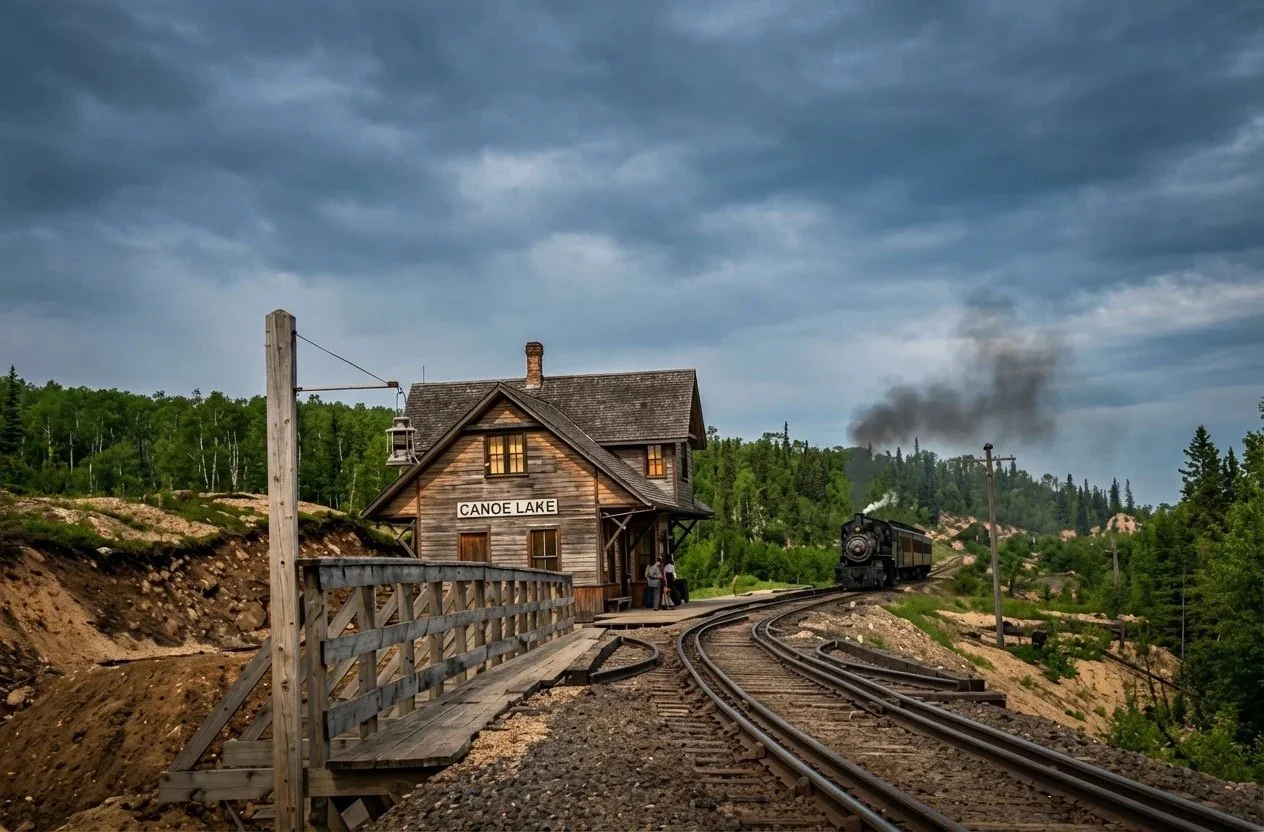
Canoe Lake Station (1917)
Not to Canoe Lake. Not to Mowat Lodge. Not to the place that had been, for several of them, both an artistic classroom and a shared home. This blog post does not claim to know precisely why. But it does argue that the Group’s collective absence—permanent, unexplained, and historically anomalous—deserves closer examination.
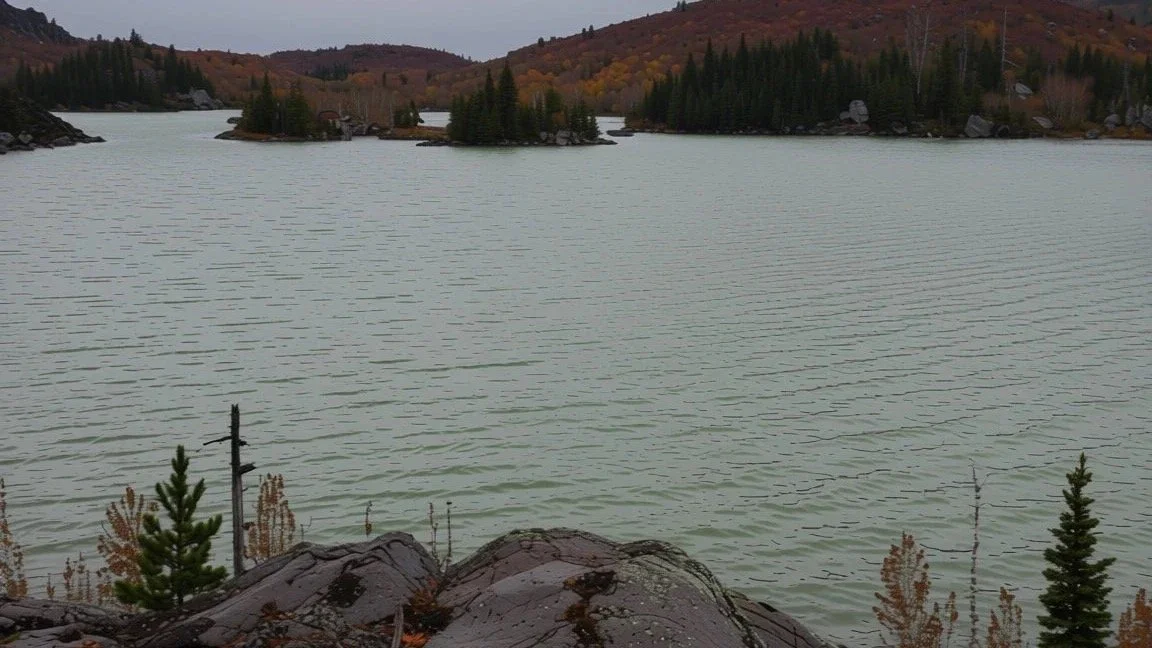
Canoe Lake: As Thomson would have seen it in 1917
Before 1917: Canoe Lake as a Creative Centre
Before Thomson’s death, Algonquin Park was not just another sketching destination. It was a crucible. Thomson knew the terrain intimately from his years painting there and serving as a guide. He understood the lakes, portages, and seasonal rhythms. When other artists joined him there, they did so as guests—relying on his knowledge, his routes, and his sense of place. They stayed at Mowat Lodge. They paddled the same waters. They painted the same shorelines. Canoe Lake was not incidental to their work; it was formative.
Given this, one might reasonably expect that the Group would eventually return—if only to reconnect with a place so deeply tied to their beginnings. They did not.
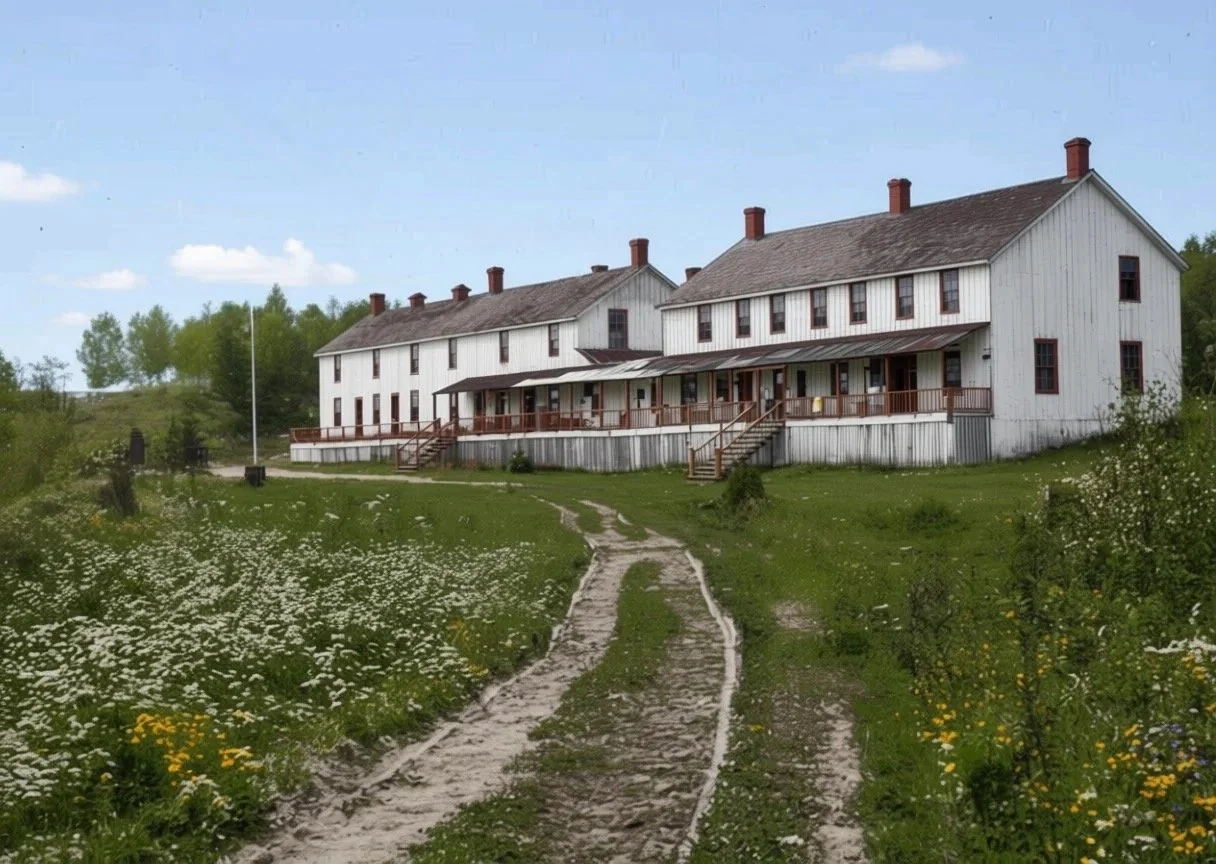
Mowat Lodge
The Public Explanation
When asked about this absence, A.Y. Jackson offered a simple and generous explanation: “He was the guide, the interpreter, and we the guests, partaking of his hospitality so generously given.”
Publicly, this makes sense. Thomson had been the organizing force behind those Algonquin trips. Without him, the area may have felt diminished—artistically and emotionally. Canoe Lake, once associated with camaraderie and discovery, had become inseparable from loss.
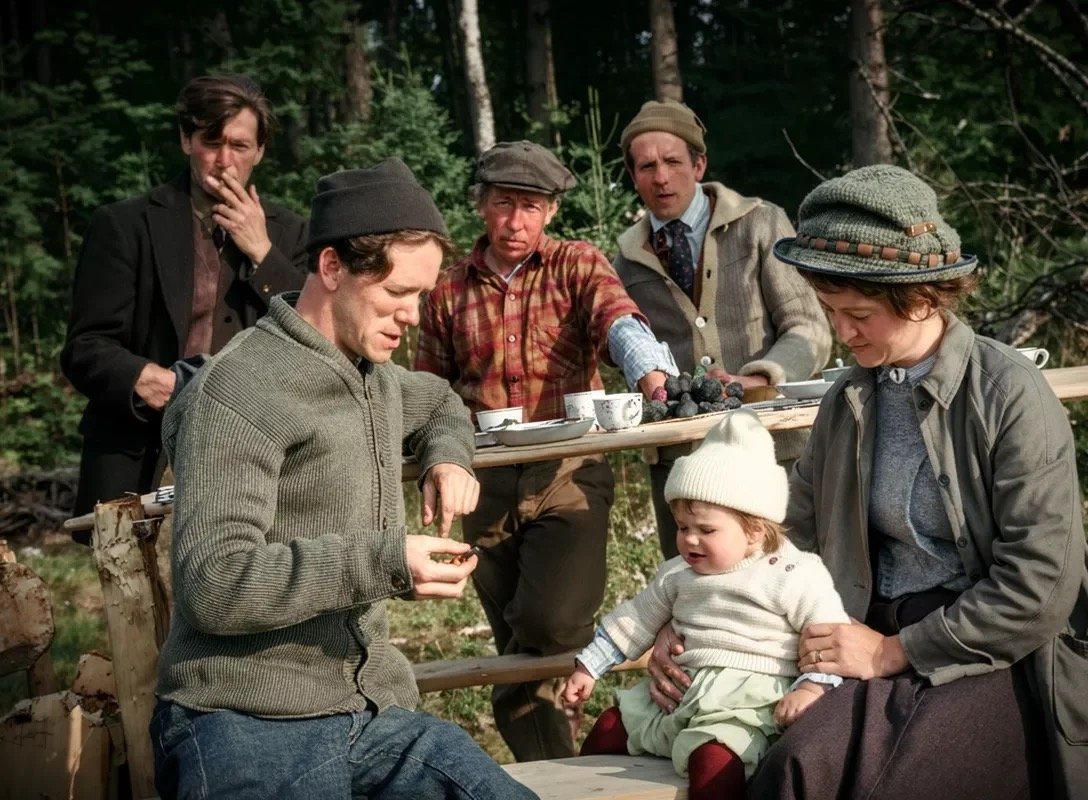
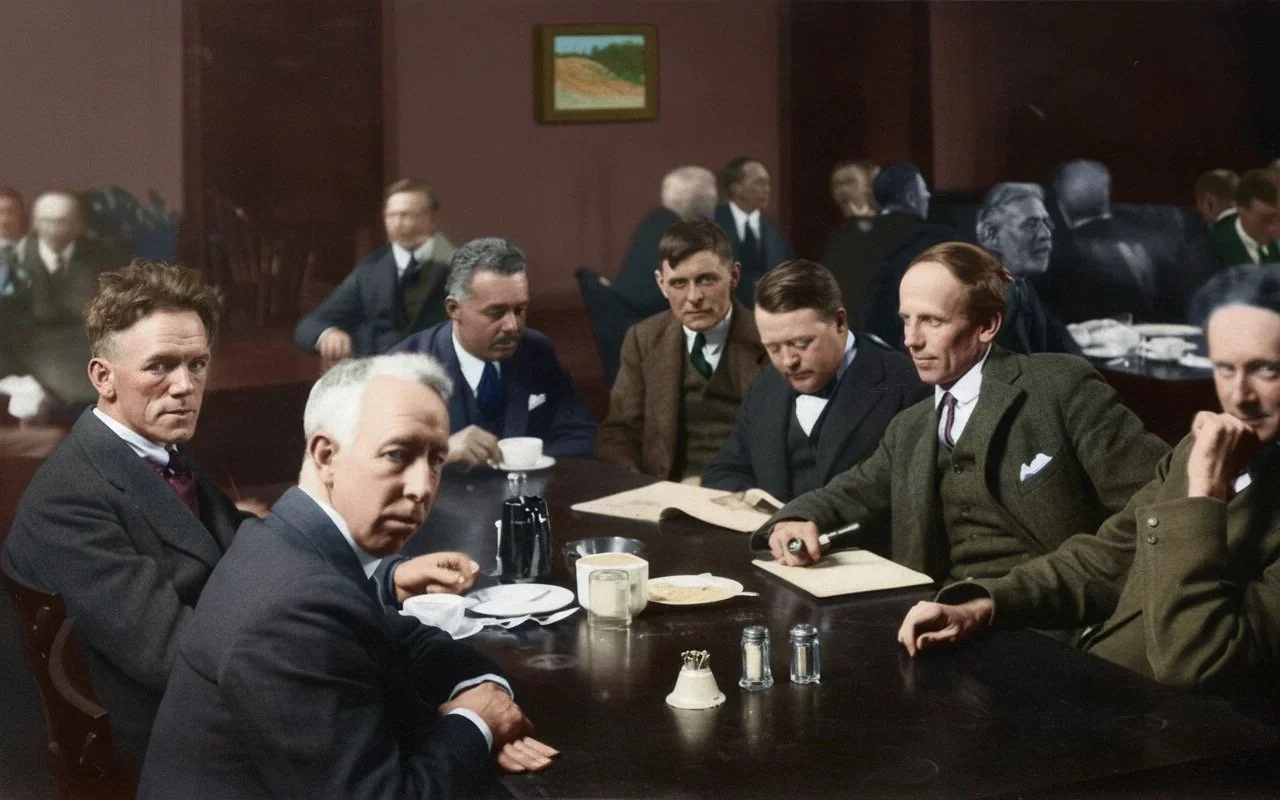
Tom Thomson, F.H. Varley, A.Y. Jackson, Arthur Lismer, Marjorie Lismer and Mrs. Ester Lismer. (Algonquin Park 1914)
Grief alone could explain reluctance to return. But grief rarely produces permanent avoidance—especially among artists who continued to work together, travel together, and seek out new wilderness environments almost immediately afterward.
They Did Not Stop Traveling — They Went Elsewhere
What complicates the grief explanation is what the Group did instead.
Rather than retreat from landscape painting, the artists doubled down. Beginning in 1918, they launched expeditions to Algoma, Muskoka, and the north shore of Lake Superior—famously including boxcar sketching trips that became part of Canadian art legend.
In other words, they were not avoiding wilderness. They were not avoiding northern Ontario. They were not avoiding collaboration. They were avoiding Canoe Lake.
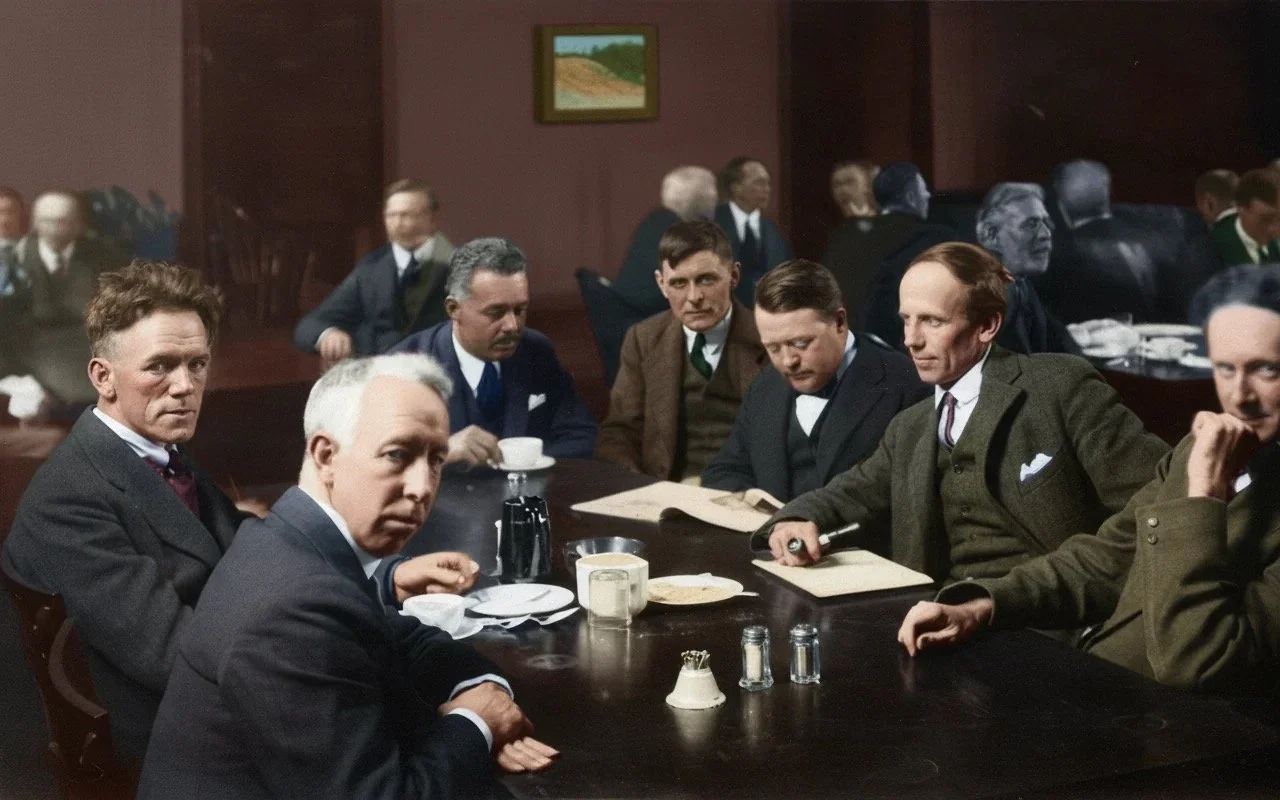
Silence and Unease Within the Group
Later recollections hint that this avoidance may have been about more than sorrow.
A.J. Casson, the youngest member of the Group and the only one who never knew Thomson personally, remarked that he believed the older members knew more about Thomson’s death than they were willing to say publicly. Casson recalled that if he entered a room while the others were discussing Thomson, the conversation would abruptly stop—a reaction that aroused his suspicions.
This is not proof of knowledge, but it is suggestive of reticence, and of boundaries drawn within the group about what could be said—and to whom. Adding to this is a recollection repeated by Doug Dunford, based on a statement by Ruth Upjohn, who reported overhearing members of the Group discussing the idea that the lodge owner, Shannon Fraser, had accidentally killed Thomson. Whether this conversation occurred exactly as remembered decades later is open to debate. What matters is that such a belief was circulating at all.
The Fraser Factor
This brings us to the uncomfortable question at the heart of the matter. Mowat Lodge was not simply a neutral location. It was an establishment run by Shannon Fraser—the last person known to have seen Thomson alive, and a central figure in the immediate aftermath of his death. Fraser was also associated with the earliest circulation of the suicide rumour, a claim that deeply upset Thomson’s family and contributed to decades of confusion.
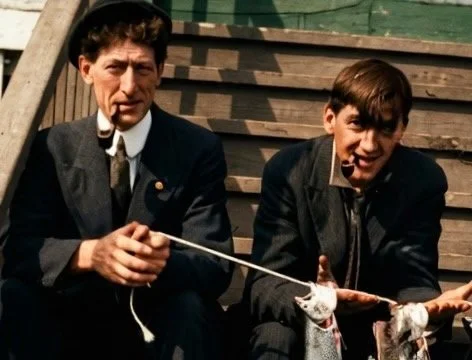
Shannon Fraser with Tom Thomson at Mowat Lodge after a day's fishing
If members of the Group suspected—even privately—that something had gone wrong at Canoe Lake, and that Fraser bore responsibility, would they have chosen to return to his lodge? Not as guests. Not as artists. Not as friends of the man who had died there. This is not an accusation. It is a question of human behaviour. People routinely avoid places associated with trauma. They are even more likely to avoid places associated with unresolved suspicion—especially when the suspected individual remains in control of that space.
How Would They Have Known?
One possible conduit for such suspicions was Dr. James MacCallum, Thomson’s close friend and patron, and a key supporter of the Group of Seven. MacCallum was aware of disturbing stories surrounding Thomson’s death, including accounts that implicated Fraser. If such information circulated privately among those closest to Thomson, it is not unreasonable to think that the artists might have heard—and quietly acted upon it. Again, this does not require certainty. It requires only doubt sufficient to alter behaviour.
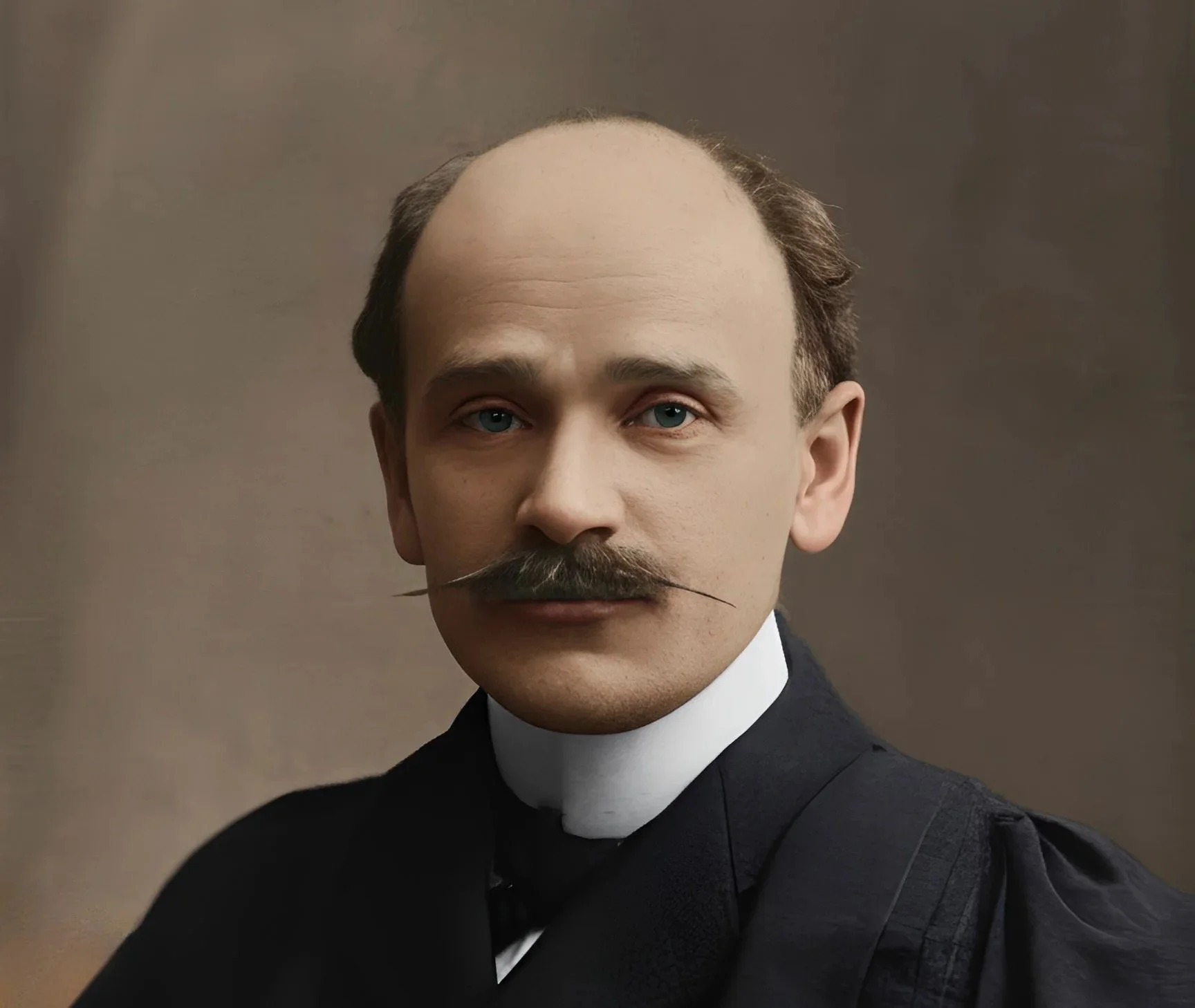
Dr James MacCallum. Thomson's friend and Patron