
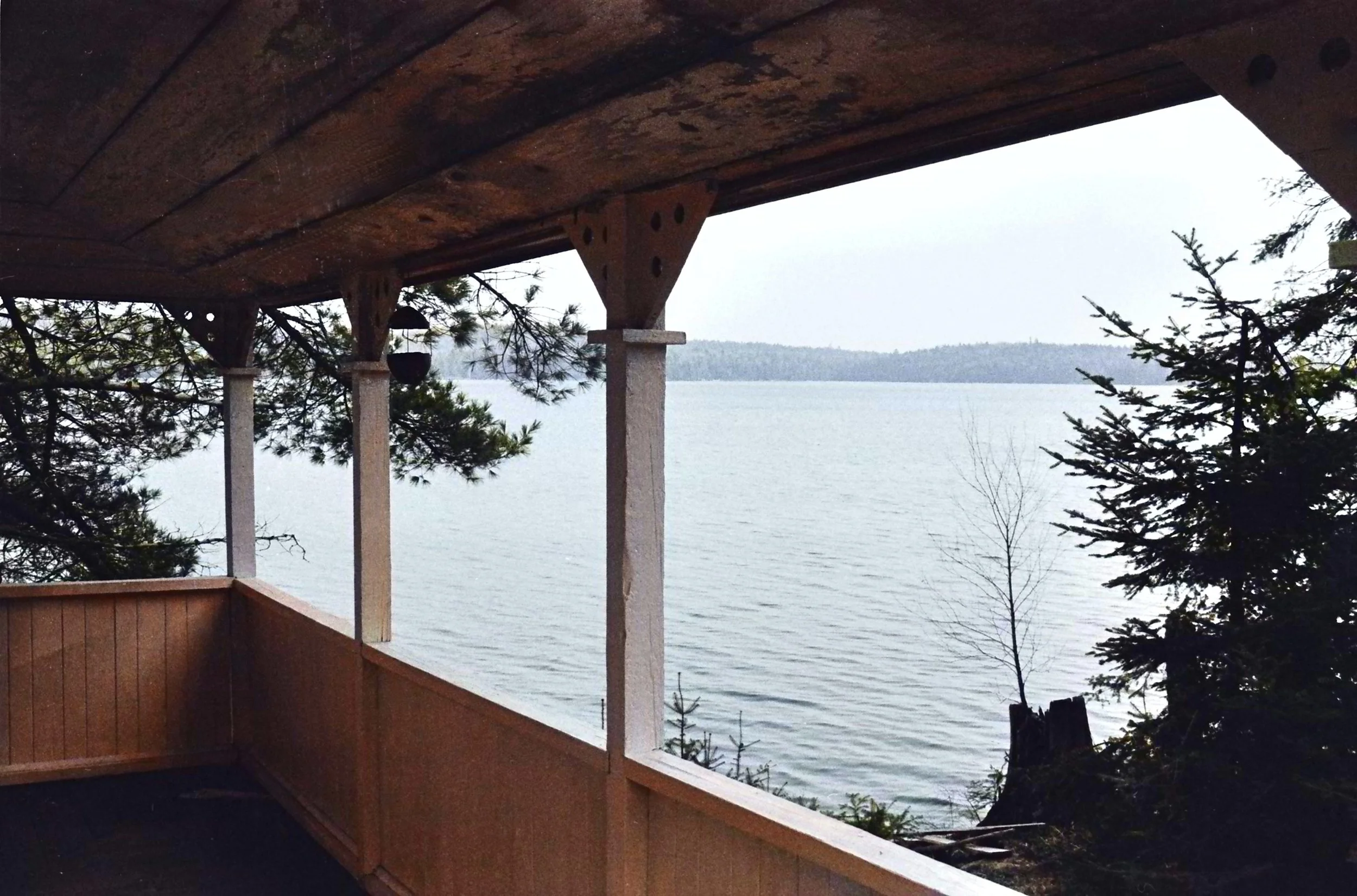
Porch at the Trainor Cottage, Canoe Lake
A MYSTERY THAT BECAME A THIRTY-YEAR JOURNEY
R.J. Anderson and John Little first met in 1988 while both were living in Bracebridge, Ontario—a community with deep connections to Algonquin Park and the enduring mystery surrounding the death of Tom Thomson.
Little was working as a journalist, while Anderson was employed with the local gas utility. Their professional lives were very different, but they shared a fascination with the unanswered questions surrounding Thomson’s final days at Canoe Lake.
What began as a shared curiosity would grow into more than three decades of research, investigation and exploration—and ultimately become the foundation for Larry Dixon’s Cabin.
THE QUESTIONS THAT CAME BEFORE
Long before Anderson and Little began their own investigation, others had questioned the accepted account of Tom Thomson’s death. Among them was Judge William T. Little, whose careful examination of the surviving evidence challenged the idea that the mystery had ever truly been settled.
Drawing on testimony, historical records and the recollections of people connected to Canoe Lake, Judge Little assembled a body of research that raised important questions about the circumstances surrounding Thomson’s disappearance and death.
His work would become an important foundation for the investigation Anderson and Little were about to undertake.

Judge William T. Little (Circa 1989)
TAKING THE INVESTIGATION TO CANOE LAKE
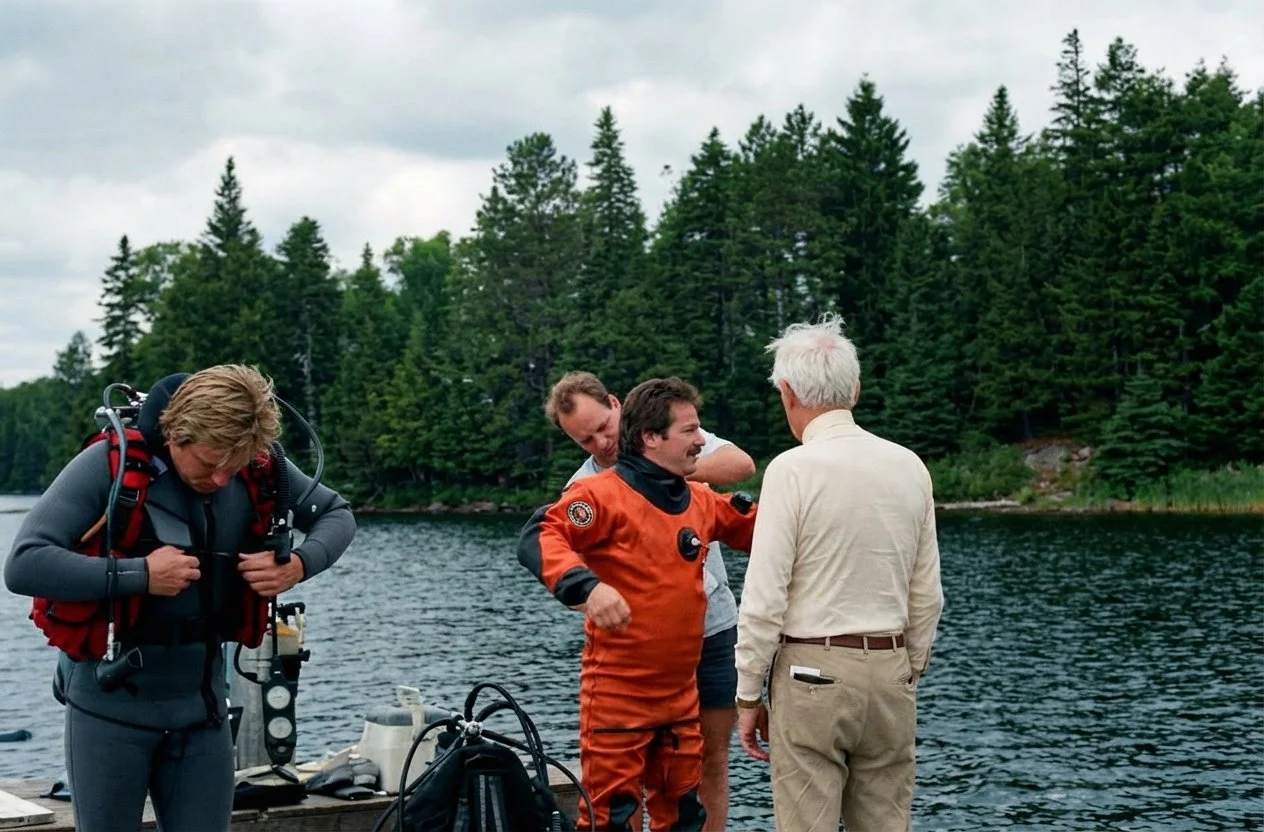
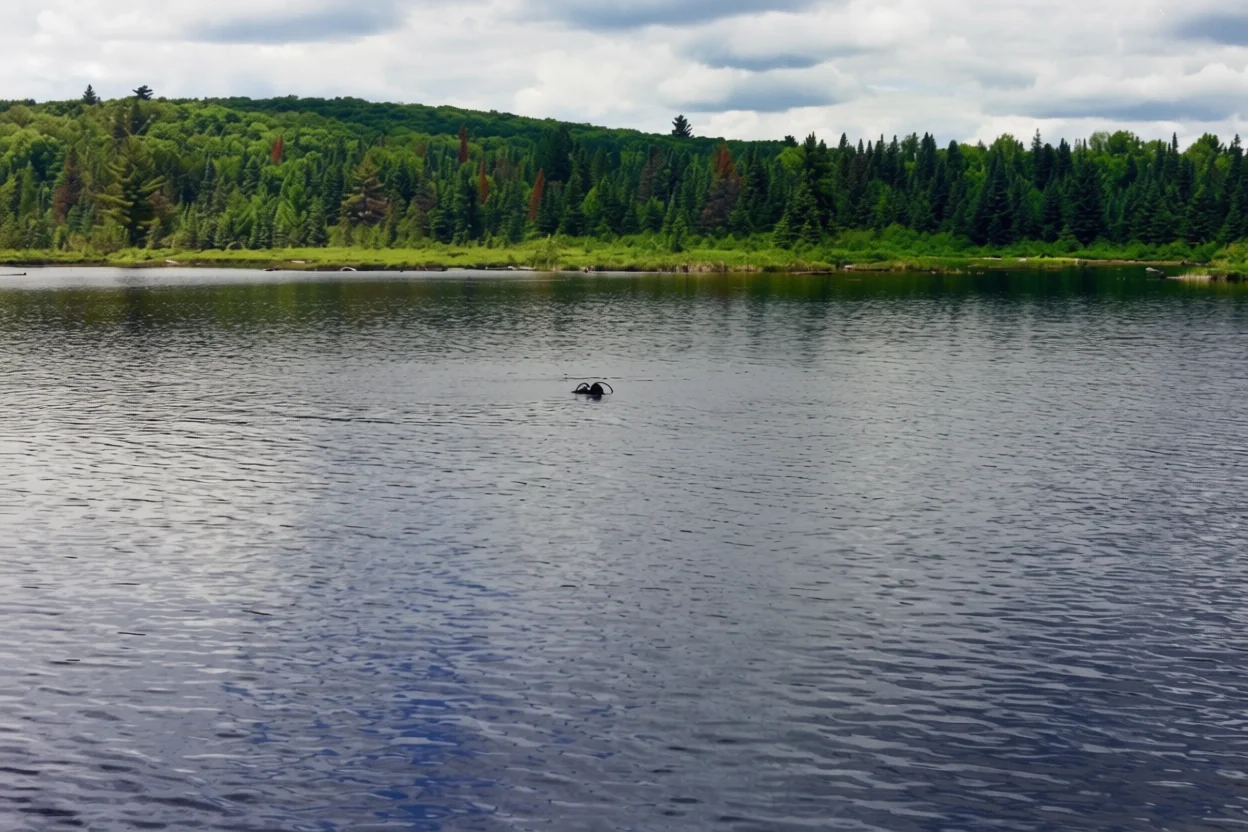
In 1989, Anderson and Little took their investigation directly to Canoe Lake. Working with a team of divers, they searched the waters connected to the enduring questions surrounding Tom Thomson’s death.
The expedition marked a turning point. What had begun with historical records, interviews and unanswered questions became a hands-on investigation of the places where the events of July 1917 had actually unfolded.
Canoe Lake was no longer simply a location in an old mystery. Anderson and Little were now exploring the same landscape, shorelines and waters that had surrounded Thomson during the final days of his life.
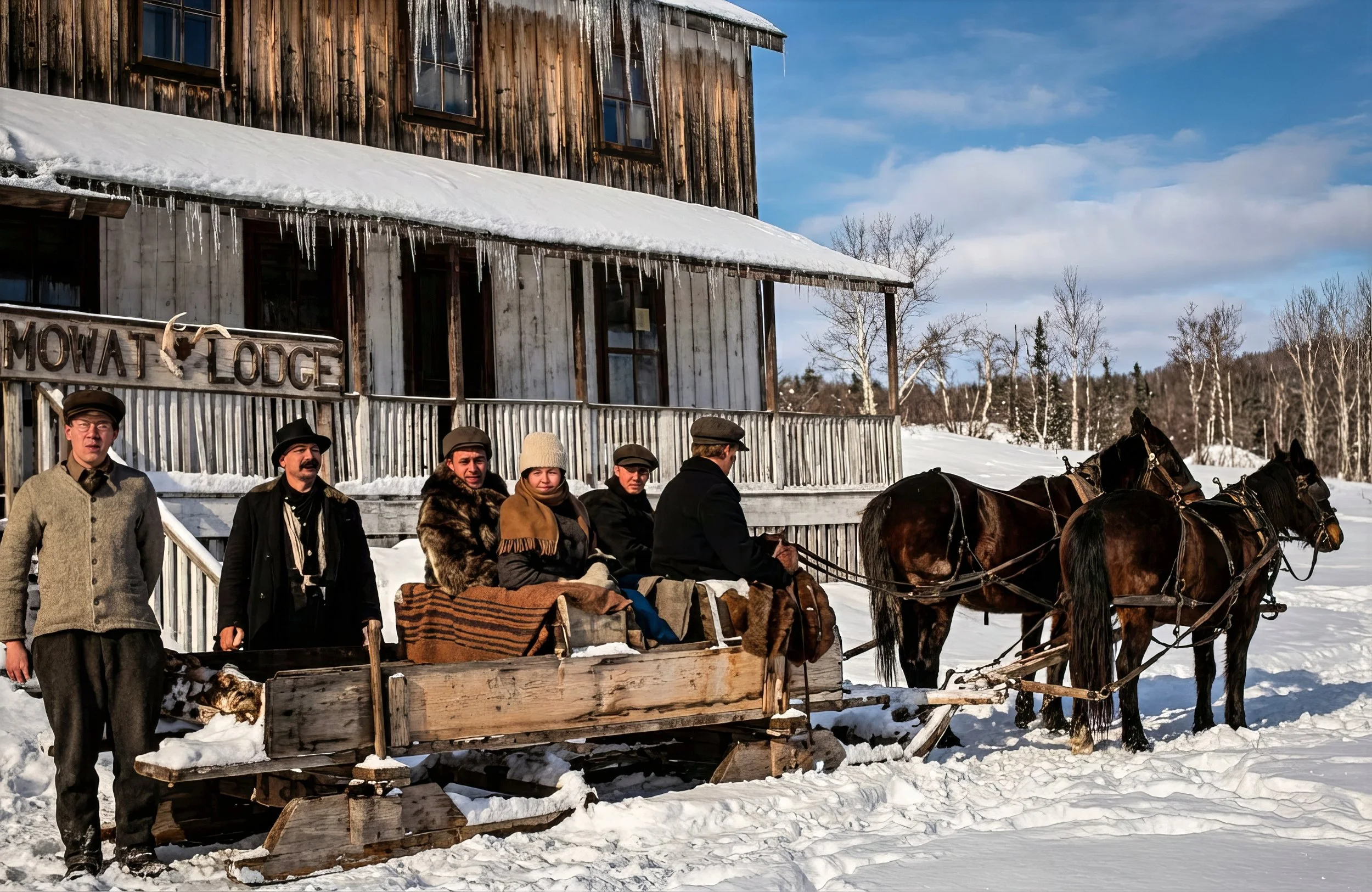
R.P. Little, Lowrey Dixon, Lt. Robin Crombie, Daphne Crombie, Charlie Scrim, Shannon Fraser.
(Left to right)
A VOICE FROM 1917
As their research continued, John Little uncovered something remarkable: a recorded interview with Daphne Crombie, who had been at Canoe Lake during the summer of 1917 and had known Tom Thomson personally.
Hearing Daphne describe the people, relationships and atmosphere surrounding Canoe Lake gave Anderson and Little something historical documents alone could never provide—a firsthand voice reaching back to the world they were trying to understand.
Her recollections became an important part of their research and helped bring the people surrounding Thomson to life not simply as figures from history, but as individuals whose personalities, relationships and memories had survived across the decades.
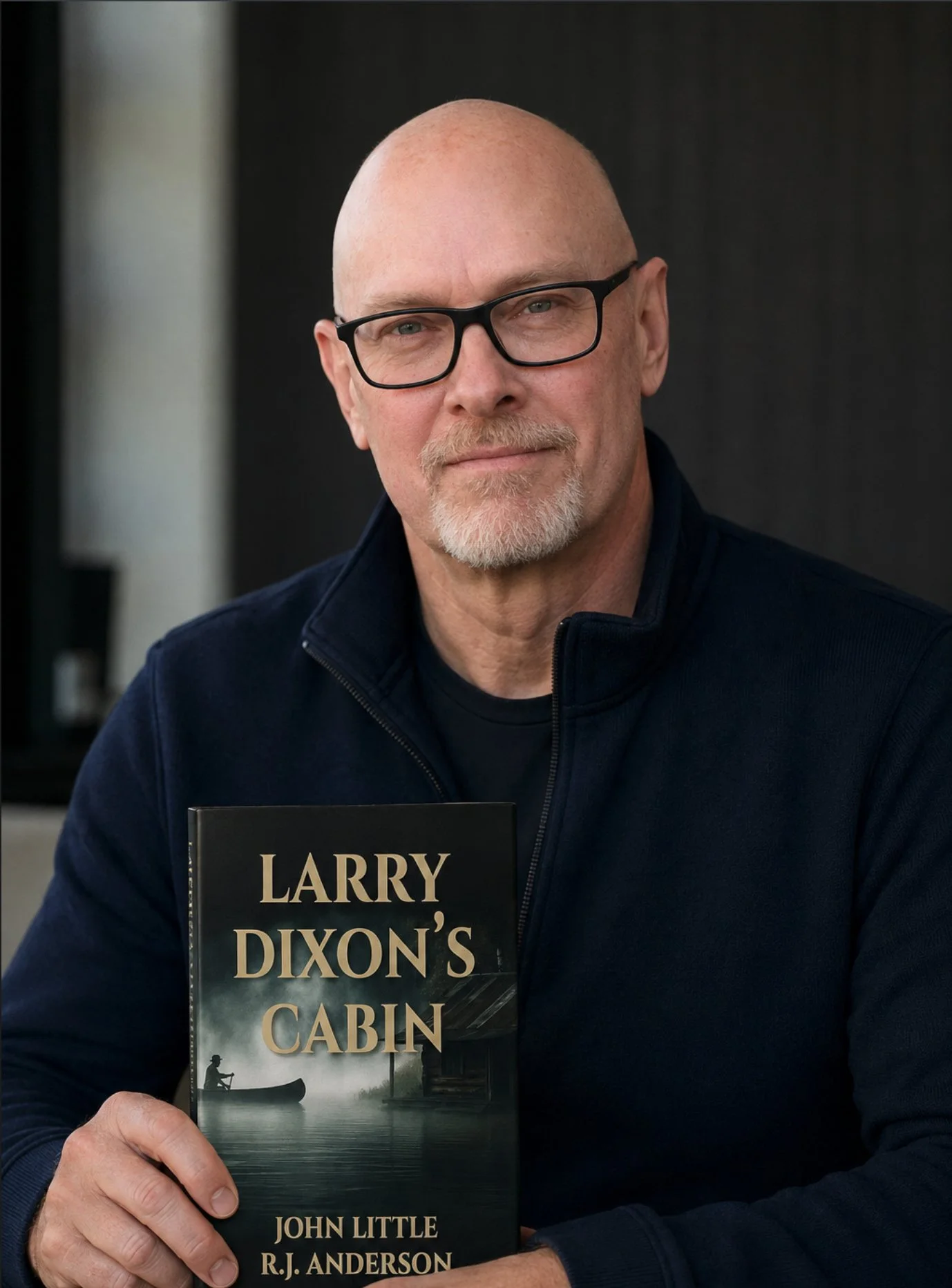
JOHN LITTLE
Author • Journalist • Researcher
John Little is a Canadian journalist and author whose career has been shaped by a lifelong interest in history, investigation and storytelling.
He has written more than forty books across a wide range of subjects and has devoted considerable research to the mystery surrounding Tom Thomson’s death. His book Who Killed Tom Thomson? examines the evidence, testimony and competing theories surrounding the events at Canoe Lake in July 1917.
Little’s decades of research into Thomson—and his discovery of Daphne Crombie’s recorded recollections—provided an extraordinary foundation for Larry Dixon’s Cabin, allowing the novel to draw upon both historical evidence and the voices of people connected to the events themselves.

R.J. ANDERSON
Author • Filmmaker • Researcher
R.J. Anderson is a Canadian author and filmmaker whose work has long focused on telling stories rooted in history, ideas and the lives of remarkable people.
His fascination with the mystery surrounding Tom Thomson began after meeting John Little in Bracebridge, Ontario, in 1988. The following year, Anderson joined Little in organizing the diving expedition on Canoe Lake, beginning a research partnership that would continue for decades.
As a filmmaker, Anderson brings a strongly visual approach to storytelling—an influence that can be felt throughout Larry Dixon’s Cabin, from the wilderness of Algonquin Park in 1917 to Jeff O’Brian’s investigation sixty years later.
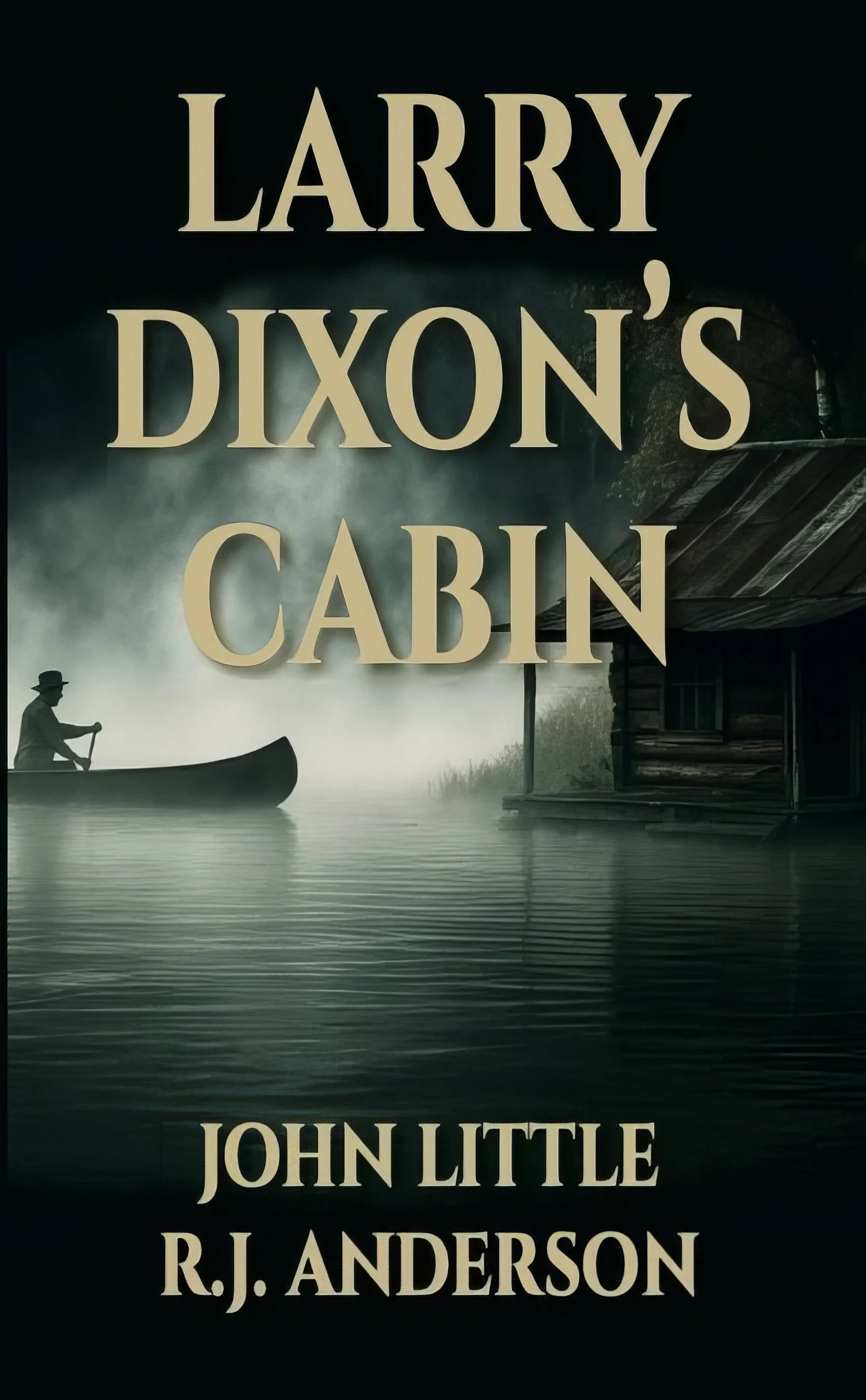
For more than three decades, John Little and R.J. Anderson continued to examine the circumstances surrounding Tom Thomson’s death—reviewing historical records, interviewing people connected to the story, consulting investigators and considering the many theories that have emerged since 1917.
Over time, they accumulated an extraordinary collection of facts, recollections and circumstantial evidence. But some questions could never be answered by the historical record alone.
Larry Dixon’s Cabin gave them another way to explore those questions.
By combining documented history with fiction, Anderson and Little were able to bring the people and places surrounding the mystery to life while exploring a possibility that the surviving evidence suggests—but history may never be able to prove.
FROM INVESTIGATION TO NOVEL
DISCOVER THE STORY
More than thirty years of research. A mystery more than a century old. And a story that asks what may really have happened at Canoe Lake in July 1917.