
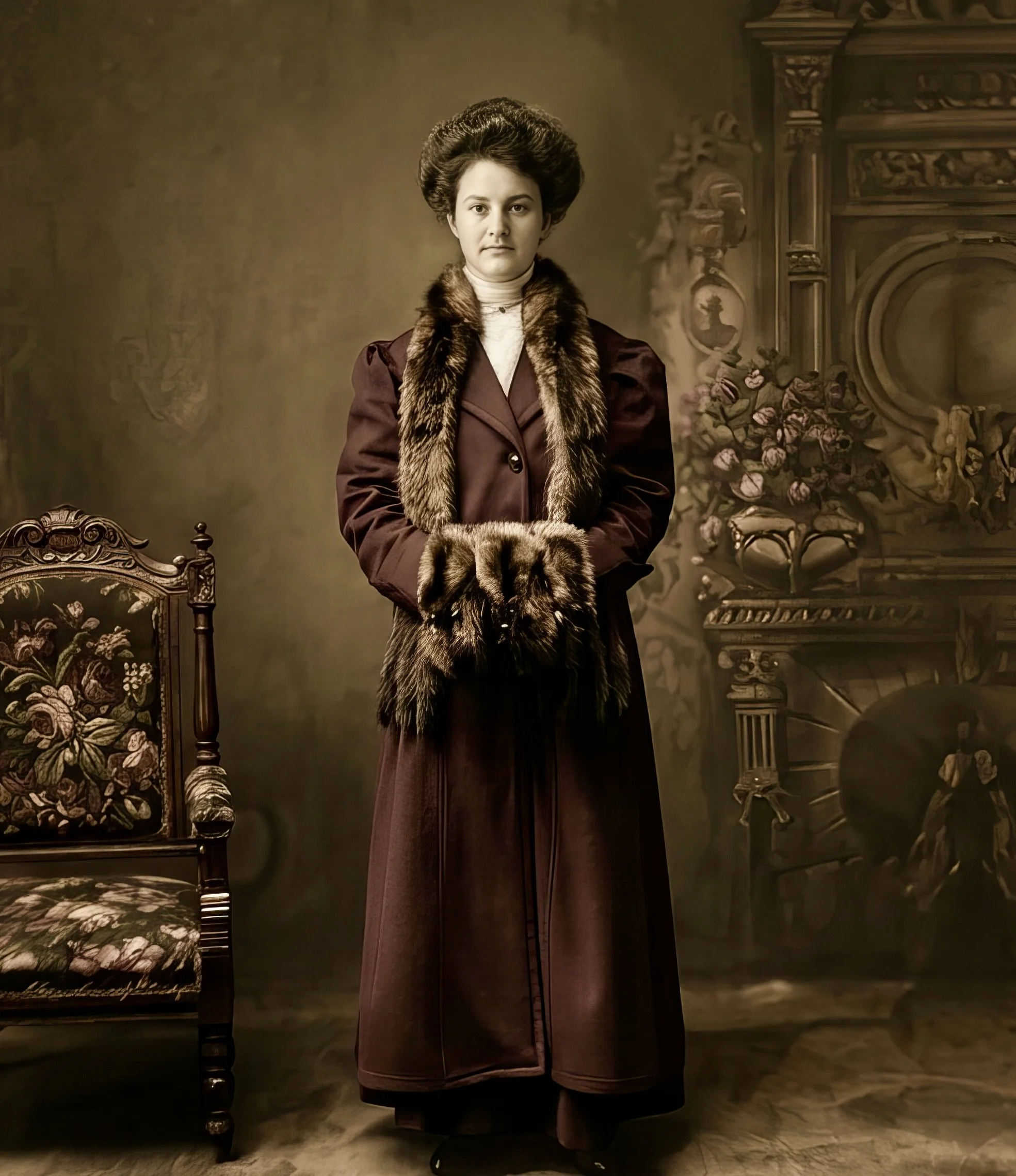
WINNIFRED TRAINOR
1917
THE WOMAN CLOSEST TO TOM
In the summer of 1917, the remote lakes and forests of Algonquin Park became the setting not only for some of Tom Thomson’s most memorable paintings, but also for one of the most personal relationships of his life.
Winnifred “Winnie” Trainor was a confident and independent young woman whose presence at Canoe Lake revealed a side of Thomson that extended beyond his familiar image as the solitary wilderness artist.
A FAMILIAR RETURN
Canoe Lake was already a familiar part of Winnie's life. Her family had a cottage there, and she regularly travelled from her home in Huntsville to spend time in Algonquin Park.
On one such visit, Tom meets Winnie at the train station and accompanies her back to Canoe Lake—a simple moment that reflects the familiarity and closeness that had developed between them.
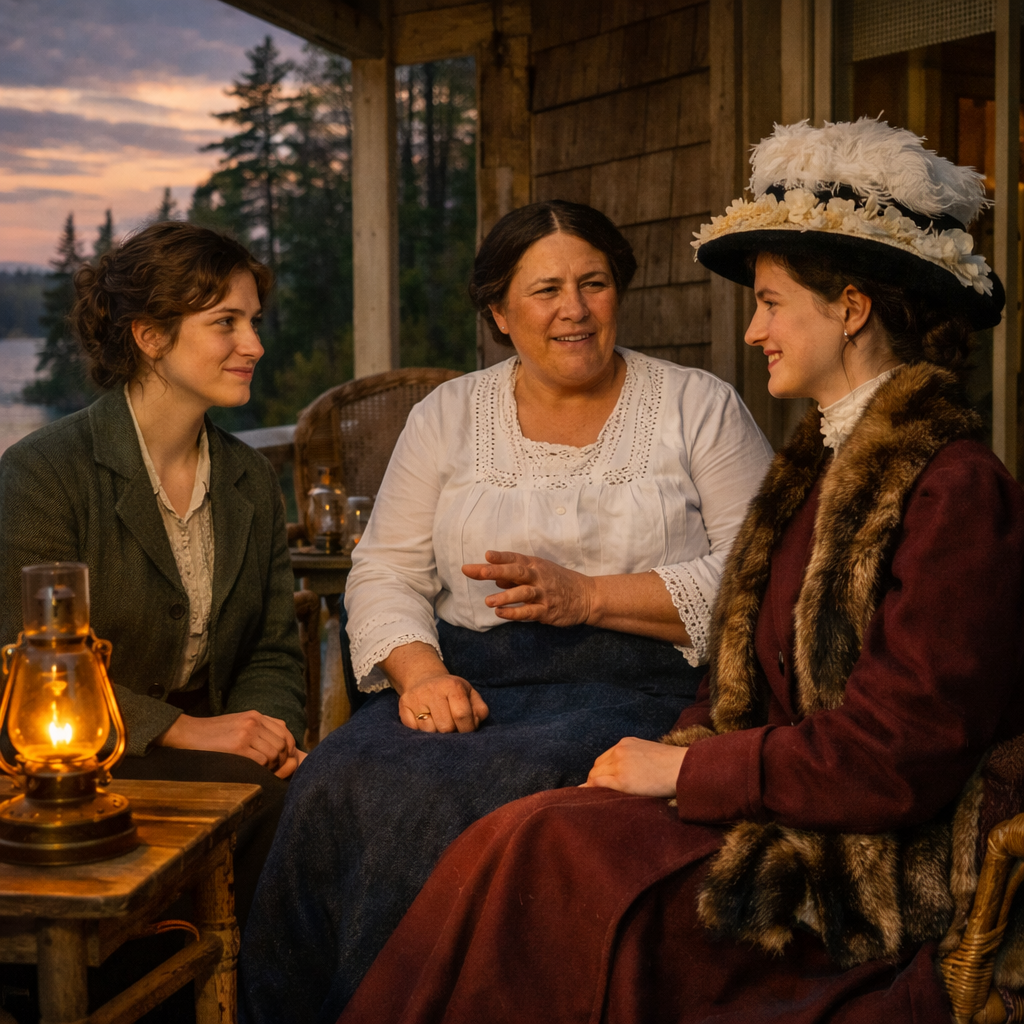
Daphne Crombie, Annie Fraser, Winnie Trainor
PART OF THE CANOE LAKE COMMUNITY
Winnie was no outsider at Canoe Lake. Through her family's cottage and her frequent visits, she was part of the small community of people whose lives crossed at the lake and around Mowat Lodge.
Her familiarity with people such as Annie Fraser and Daphne Crombie places Winnie within the network of friendships and relationships surrounding Tom Thomson during the summer of 1917.
TOM AND WINNIE
Winnie's relationship with Tom Thomson was different from many of the friendships surrounding him at Canoe Lake. Their time together reveals a more personal side of a man often remembered primarily as a solitary artist and outdoorsman.
In Larry Dixon's Cabin, their closeness becomes an important part of the relationships surrounding Thomson during his final summer—and adds another dimension to the mystery of what happened in July 1917.
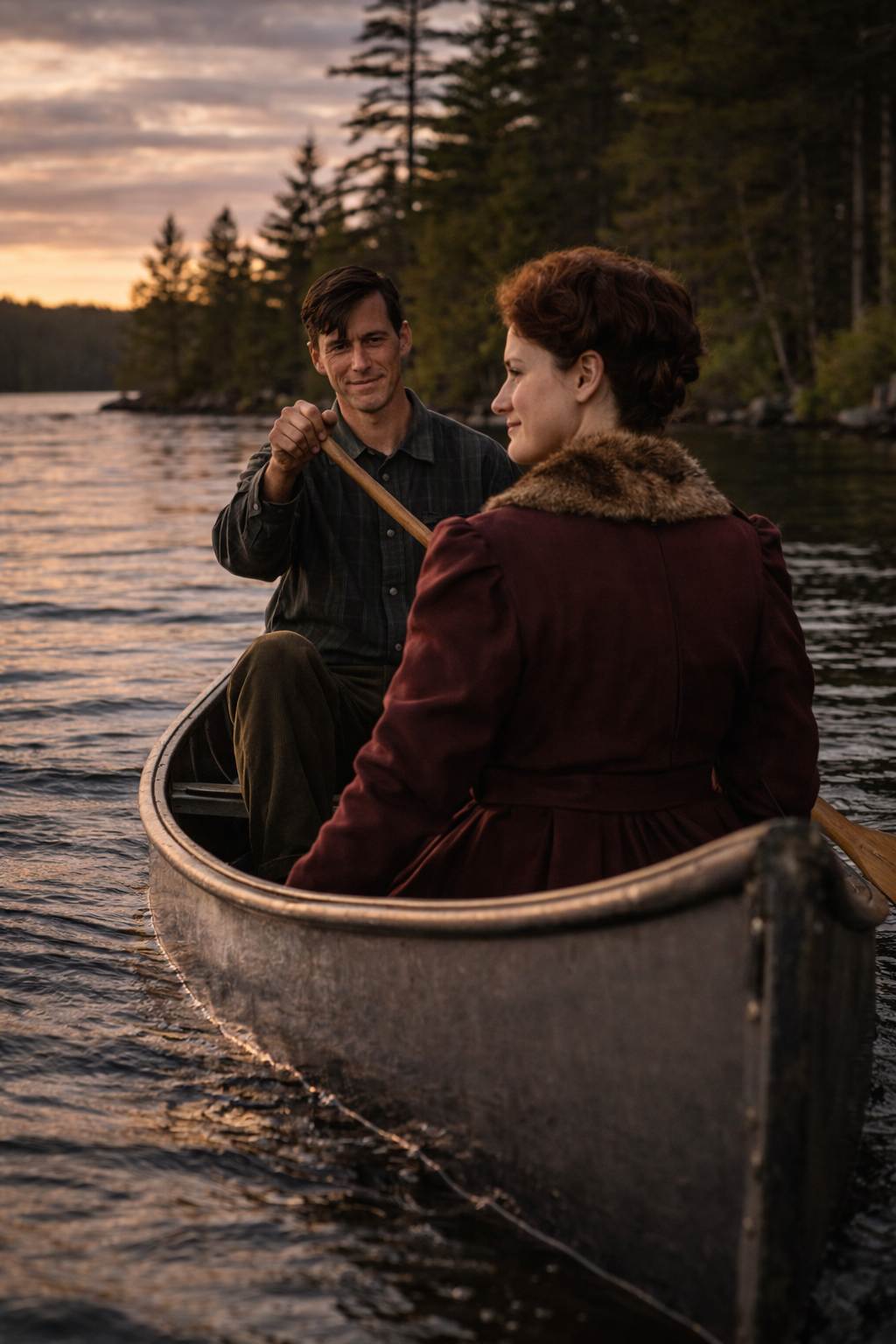
A DIFFERENT SIDE OF TOM
With Winnie, Thomson appears less like the solitary figure of Canadian art history and more like an ordinary man—someone capable of companionship, affection and imagining a life beyond painting and the wilderness.
Their relationship offers a glimpse of possibilities that would never be fully realized, giving the events of the summer of 1917 an added sense of poignancy.
WHAT MIGHT HAVE BEEN

For Winnie, Tom Thomson’s death meant more than the loss of a celebrated artist. It meant the loss of someone with whom she shared a deeply personal connection—and of a future whose possibilities would remain forever unanswered.
In Larry Dixon’s Cabin, Winnie’s relationship with Tom reminds us that behind the enduring mystery of his death were real people whose lives were permanently changed by what happened at Canoe Lake in 1917.